Monday, February 26, 2018

Social Media Marketing Project Pt. 1

Introduction: When you think of Bud Light, you probably think of the good times in college, anything related to football, and the funny commercials that you watch on television. However, people may not realize that Bud Light is actually owned by Budweiser. There are two distinct differences between the two alcoholic beverages. Bud Light is a lighter, less calorie version of Budweiser, and the cans of Bud Light are blue instead of Budweiser’s red cans. It is interesting to notice how the two brands market themselves. Bud Light tends to be catered towards the younger generation of partiers and football fans, whereas Budweiser is marketed as, “The King of Beers”. This slogan, plus their well thought out, heartwarming commercials give this brand a completely different image when compared to Bud Light. 


The company who owns both Budweiser and Bud Light is Anheuser-Busch InBev. They are a Belgium based company that bought Budweiser back in 2008. Other beer brands they own and manage include Modelo Cerveza and Michelob Ultra. Their brewing heritage dates back more than 600 years across many generations and continents. From their home brewery in Leuven, Belgium, to the iconic Anheuser-Busch in St. Louis, MO, to Johannesburg, South Africa, and another in Petropolis, Brazil. Their footprint is recognized all across the world, and they have been able to collaborate with many brands to market and manage. 


Platforms: Now after looking at both Budweiser and Bud Light’s websites, there was immediately a difference. Bud Light, the beer that is catered towards the younger audience, had a video with the now popular phrase, “dilly, dilly!” This silly slogan became popular leading up to the Super Bowl. Ironically, when the Philadelphia Eagles won it, people started chanting, “Philly, Philly, dilly, dilly!” This was exactly what Bud Light wanted to happen with their marketing strategy, and in the end, they got lucky with the Eagles winning and it has paid off. Alternatively, Budweiser’s website did not show any video, instead it presented an option to join a basic rewards program with incentives that offered the beer’s merchandise. Right here is where the line is drawn between both brands. Since Budweiser is considered to be, “The King of Beers,” what better way to stay loyal to the king than a rewards program? For Bud Light, their slogan embodies a silly communal image that is fueled by the ease of drinkability, since the beer is lighter than Budweiser. 


Both brands use Facebook, Twitter, and Instagram accounts. Bud Light’s Facebook has a total of around 8 million likes compared to Budweiser’s 14 million. However on Twitter, Bud Light blows Budweiser out of the water with 175,000 followers to only 5,000 for “The King of Beers.” Instagram shows 207,000 followers for Bud Light and 286,000 for Budweiser. Another difference between these two brands in terms of marketing are their commercials. Here is an example of how the popular “dilly, dilly” phrase came to light amongst the groundswell. 


Compared to Budweiser’s commercial, theirs focuses on the idea that their beer is for America, by America. It uses the Clydesdale horse to create a symbol of gracefulness and beauty that is portrayed in the dramatic commercial that hits the nostalgic note of ending a hard day’s work. It pertains more to the older generation of loyal drinkers. Over the years, this horse has been the focal point for Budweiser, so people who watch this commercial will continually be reminded of the message that is shown at the end of the commercial, “This Bud’s from beer country, this Bud’s for you.”


In regards to their activity on social media, both brands post daily and also respond to comments on Facebook as shown in the screenshots below.


However, the Twitter platform showed some differences. Budweiser launched a campaign that focuses on brewing beer using renewable energy. All of that is really great in terms of their image as a brand and being conscience of the environment, but they lack daily interaction with their Twitter audience. As you can see from the screenshot, they have only interacted with their post that introduced the campaign on January 25th. 


On the other hand, Bud Light interacts considerably more often than Budweiser. This is very important, as it keeps customers engaged in their profile. An added plus is the sense of humor that they throw into their replies, which makes them seem like any other Bud Light lover. This day to day connection is key to maintaining the groundswell supporters, and it certainly shows in the amount of followers on the accounts. 


In terms of Instagram, both brands posted often, but lacked interaction with commentators. This might be a factor that the brands should work on in the future. 


Analysis:
According to data provided by socialmention.com, Budweiser’s data declined compared to Bud Light. These screenshots were taken on 2/23, 2/24, and 2/26 respectively. It is important to note that the 23rd and 24th were Friday and Saturday, then the 26th being a Monday. The numbers of engagement, reach, and mentions declined as the weekend passed by. 


Budweiser: 


Bud Light: 


On average, the two companies are generally the same popularity wise, however, the numbers do decline after the weekend ends. We can concur that Bud Light is the more popular brand due to its strong ratio between positive and negative sentiment. On Google Trends, the red Budweiser line seems to be just as popular as the blue Bud Light line. The spike occurred during the Super Bowl not surprisingly. However, the reason behind Budweiser's taller spike could have to do with their choice of commercial. Earlier, I linked a video of the Clydesdale horse that symbolized the brand as "America's beer in beer country." Something I took away from this data was that commercials with animals have more value to them marketing-wise. But nonetheless, Budweiser seems to have the edge when it comes to passion. Their slogan appears to be working its magic, and the numbers back it up. 

Conclusion:

-Budweiser and Bud Light both have very specific marketing campaigns that attract different drinkers. One focuses on the loyalty of sticking to the same drink, while the other emphasizes the communal aspect of getting together and drinking with friends with a silly twist. "Dilly, dilly!"

-Both brands tend to decline in social mention as the weekend ends. This makes sense, but to see it through data analysis and numbers makes the picture that much more clear. 

-For social media overall, the brands are doing their best with Facebook and Twitter. The only platform I think the brands can improve is Instagram. Maybe using the "Go Live" feature would be a start? Just to give your groundswell an inside look into a brewery or something. Also, more interaction with commentators would be another aspect to work on. In all, these beer companies are very interesting to look into!

Monday, February 19, 2018

Reading Response #2

In chapter 10 of Charlene Li and Josh Bernoff's 2011 book, Groundswell: Winning in a world transformed by social technologies, they discuss how organizations can prepare for a transformation. In the digital age of media, the advantages of using a social media platform such as Twitter, makes listening to the groundswell a lot easier. Some of the key characteristics of the groundswell include talking, listening, energizing, supporting, and embracing. Using this modern technology, organizations are now capable of conveying messages to their groundswell and thinking of new ways to energize it. For example, in the Twitter app, there is a feature that allows the user to "pin" a tweet so it is at the top of their profile for everyone to see immediately. This type of tweet might include a sort of jump start for the audience to learn about what kind of organization they are. 


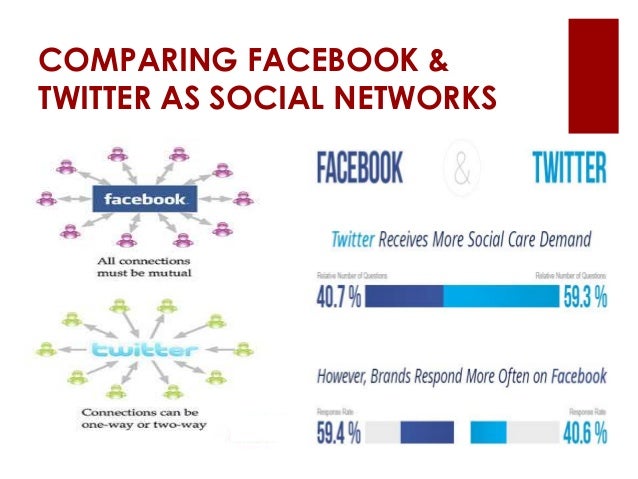
The main difference about Twitter is that it is free, open, and it connects people. In comparison to Facebook, it is a faster news feed that updates trending topics constantly and offers more reason to navigate using hashtags. It can also be used as a type of forum to talk to everyone without getting their approval, so whenever a post is published, it is a free for all in terms of opinions and reactions. On the contrary, Facebook has many of these features, however, a business can not directly respond to a customer's comment for example unless the commenter "likes" the company's page. Basically what I am trying to say is that there is a lot more freedom when it comes to Twitter. 


So, when Li and Bernoff talk about the process of how an organization might go through a transformation, it is important to stay true to the groundswell. For example, one of the three stages of a transformation might start with the mental shift, which is "essential to giving people in your organization an opportunity to adjust their concepts of how things should work" (Li, Bernoff 199). As the transformation gradually progresses to building a plan to grow and then to building partners around your plan, it is important to note this idea of the customer-centric organization. This notion of an organization is the pinnacle to a great and successful company. There are ways that modern technology platforms, such as Twitter, can help us or make life a little more easier for us to energize the groundswell and grow with it. 


One of the most recent examples in class that made me think while I was reading was the McDonalds promotion. I found an example of a marketing campaign that Coca Cola did for a soccer match in Argentina that best highlights what Li and Bernoff discussed in chapter 9. Asking your customers to tweet out supporting messages for their respective teams was what Coca Cola advertised, thanks to a company called Papertweetos. 


The result? Two million tweets were printed out on confetti during the introduction of the teams at the start of the match. The customized pieces of confetti symbolized the chaotic, yet loyal fan bases that energized, supported, and embraced their favorite teams.


Works cited: Li, Charlene, et al. Groundswell. Thema, 2011. 

Monday, February 12, 2018

Hurricane Harvey Relief Efforts

             Have you ever heard of a disaster relief effort raising $37 million in just a mere 3 weeks? This was accomplished after Hurricane Harvey destroyed and flooded the city of Houston from August 29th to August 30th. Residents of the city were stranded on top of rooftops, in need of food and water, and were in utter shock at the result of this terrible disaster.            


          Hurricane Harvey was the costliest Atlantic hurricane to ever hit the United States, with damages estimated at almost $200 billion dollars. Many homes were unsalvageable, which forced millions of families onto the streets. Rescue operations were bombarded with thousands of calls pouring in from people who needed immediate help. As an alternative to 911, Houston residents took to social media to call out for help and to share their location so rescue boats could easily locate them. Facebook and Twitter were the primary platforms used to send out addresses and names of those who were in dire need of medical assistance. 


          The use of the hashtag #harveyrescue allowed responders to organize their feeds in a way that only showed tweets that used that specific hashtag. In addition to this, responders could archive posts in the order of severity so they could send out the appropriate rescue teams to attend to the injured. 

          The accessibility of these accounts allowed for people to quickly get in touch with responders which was key because the storm disabled over 12 emergency call centers. Some people who were stranded in their homes said that when they called 911, they were put on hold for as long as 45 minutes just to receive help. It was a prime example of technology outpacing the government's ability to manage in these types of situations. These social media platforms have become such effective tools to reach people that police and government officials are using them as an essential means of communication in the event of a natural disaster. 


          But at the peak of the crisis, hundreds of individuals and organizations rallied behind Harvey’s victims, which led to the strongest showings of charity fundraising in recent history. 


          J.J. Watt, a star defensive player for the Houston Texans football team decided to take action. He set up his own Houston Flood Relief Fund on his personal website to raise money to help those who were affected in the terrible disaster. In addition, Watt used his Twitter account to announce the effort and the results were immediate. An incredible $37 million was donated in just three weeks. 


         His original goal of $200,000 was blown away as millions of donations poured in from anonymous people. Celebrities such as Jimmy Fallon, Ellen Degeneres, and Drake were among those who donated, which created a huge wave of followers for Watt’s fund. Obviously, Watt was amazed about how his fund became so popular. “There are not enough words to thank you all for your generosity. If there is one thing I have taken away from these last few weeks, it is the reassurance of how much good is out there in our world.” 

Monday, February 5, 2018

Crowdsourcing

         Crowdsourcing is a sourcing model that uses individuals or organizations to generate interaction and engagement typically on the internet. The use of social media allows companies to create an outsource of information, in which online audiences can provide their opinions or just simply use it for resource. A perfect example of crowdsourcing is Wikipedia. The idea behind Wikipedia was created with the purpose of having an online encyclopedia that anyone could contribute too. Of course, there are some accuracy issues that arise now and again, but this can be managed through editors. Crowdsourcing allows people from all over the world to connect and collaborate on projects using fast and easy communication via the internet. 


What is one way to draw a crowd? Give them the chance to win instant cash. This power of crowdsourcing marketing is being used by HQ Trivia, a new app that has gone viral since August. The app broadcasts a 15 minute show every day at 3pm and 9pm where contestants have to correctly answer 12 multiple choice questions in order to win the cash prize jackpot. The prize money varies, but the app has garnered attention through its addictive gameplay. Since there are hundreds of thousands of people playing the game every broadcast, the prize money is split between all the winners, that is, if you can get to the 12th question. Here is what the game screen looks like:


        At first, the developers of HQ Trivia created Hype, which is a live streaming service that is similar to Facebook and Instagram’s going live feature. The app was generally successful, following in the footsteps of Vine, another popular social media app that was recently discontinued. Hype created a groundswell that HQ Trivia marketed off of. According to the text, the groundswell is, “a social trend in which people use technologies to get things they need from each other rather than from traditional institutions like corporations” (9). The result is an app that introduced a new and dynamic way of crowdsourcing attention. 


Crowdsourcing is the process of connecting large groups of people via the internet who are tapped for their knowledge, expertise, time, or resources. It’s an extremely useful strategy to constitute engagement with your groundswell. Once you are able to stabilize and manage the groundswell with loyalty and trust, there is a good chance it will be easier to introduce a new trivia game or other app that can be used with the internet. Anyone can use crowdsourcing. In a sense, it is a way of solving problems and producing things by connecting online with people that you otherwise wouldn’t know.  


Social Media Marketing Project Part 2

Introduction: As mentioned in the first part of this social media analysis project, Budweiser and Bud Light are owned by the same beer com...